The Hidden Complexity of Simple Design
What Designing an Egg Cup Taught Me About Industrial Design
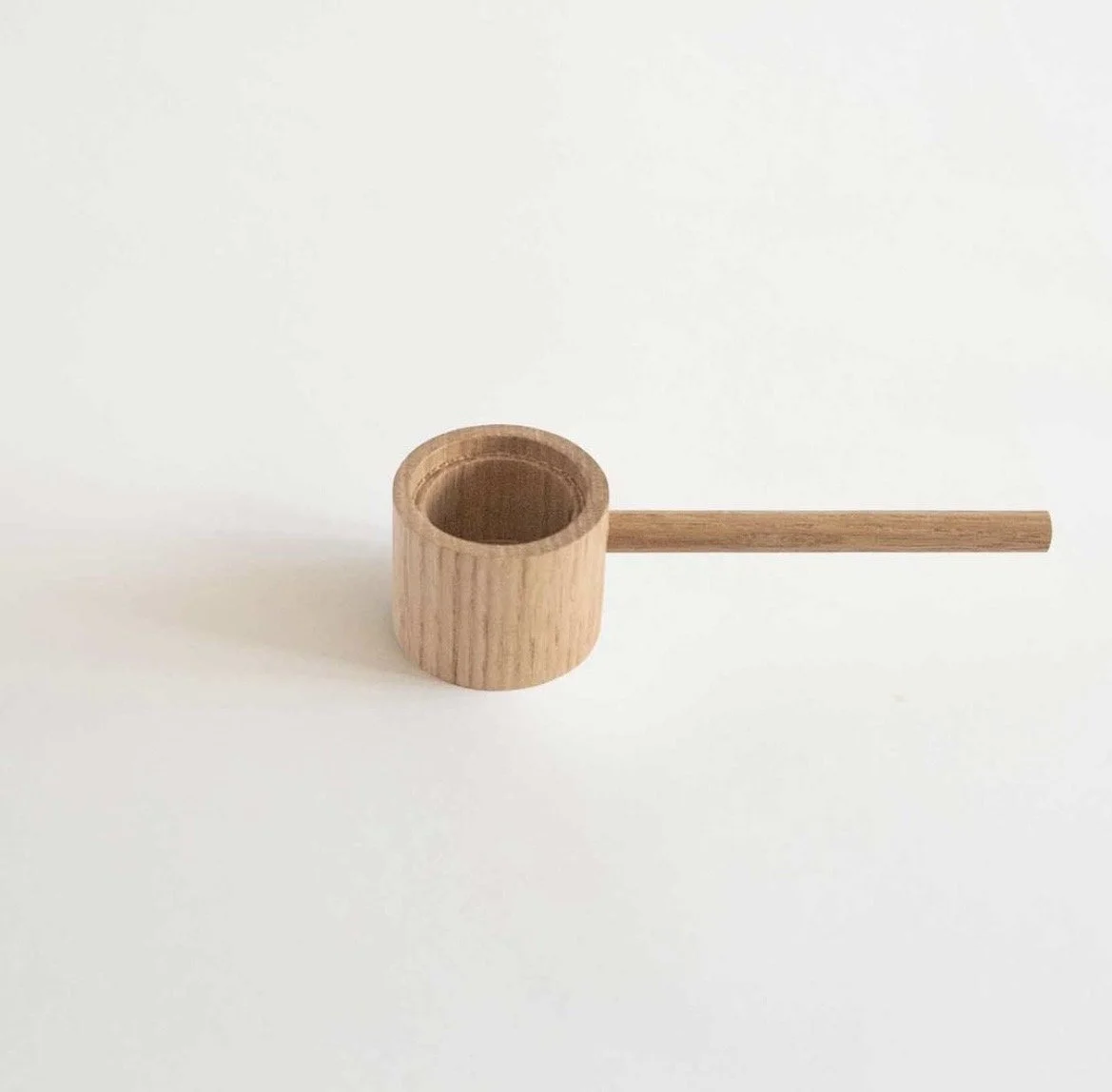
At first glance, Delicate looks like an extremely simple object. A small oak cylinder with a handle. Nothing more.
But like many industrial design projects, its simplicity hides a surprisingly complicated journey.
When I started designing Delicate, I wasn’t trying to create a minimalist egg cup. I had a much more ambitious goal.
I wanted an object that could scoop an egg directly from the carton, lower it into boiling water, and then move seamlessly from the pot to the breakfast table. One product that could accompany the egg throughout the entire experience.
From the beginning, I knew that oak was the material I wanted to use. Rationally, it wasn’t the obvious choice. Metal, plastic, or silicone would have been more practical in almost every way. But I kept coming back to the warmth, tactility, and timeless character of wood.
For a long time, I explored a more spoon-like form. Every new sketch tried to solve another functional challenge. How could it hold the egg securely? How could it be comfortable to lift from boiling water? How could it still stand elegantly on the table?
With every solution came another compromise.
Slowly, I realised that I had become so focused on functionality that I was beginning to lose the qualities that had inspired me in the first place. The object was becoming a better tool, but not necessarily a better design.
The breakthrough came when I stopped adding and started removing.
Instead of chasing more features, I concentrated on finding the simplest technical solution. That process gradually stripped the design back until only the essential elements remained: a solid oak cylinder with a single handle.
Ironically, the simplicity of the final product wasn’t the starting point. It was the destination.
Even the first prototype looked very different. Influenced by my fascination with brutalism, it featured three stepped levels inside the cup to accommodate different egg sizes. While I still love that aesthetic, removing those details ultimately made the design stronger, calmer, and more honest.
Looking back, Delicate taught me one of the most valuable lessons in industrial design.
Simple products rarely begin as simple ideas.
They become simple through countless iterations, technical challenges, difficult decisions, and the discipline to remove everything that isn’t essential.
True simplicity is never the starting point. It’s the reward for solving complexity.